

The need for precision metal components is continuously growing across industries such as automotive, electronics, medical devices, and general manufacturing. To meet the requirements of high accuracy, quality, and cost-effective manufacturing, companies have been using advanced metal forming techniques. Some of the metal forming techniques that have been used are the metal stamping technique, which has become an important manufacturing process.
While traditional metal forming techniques consist of a cutting process, the metal stamping technique makes use of a press and dies to shape the flat metal sheets. The productivity, repeatability, and minimum material wastage make this technique a good choice for mass manufacturing.
The metal stamping technique has become an essential part of the manufacturing industry.
1. What Is the Metal Stamping Process?
The metal stamping process is a manufacturing technique that uses stamping machines and specially designed dies to apply force to metal sheets, causing them to be cut, bent, or formed into desired shapes.
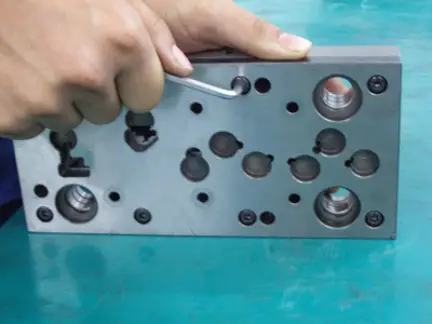
The process mainly depends on three basic factors, including the stamping machine, the right die, and suitable metals. Although the stamping machine delivers the required force, the die is responsible for defining the final shape and dimensions of the produced components.
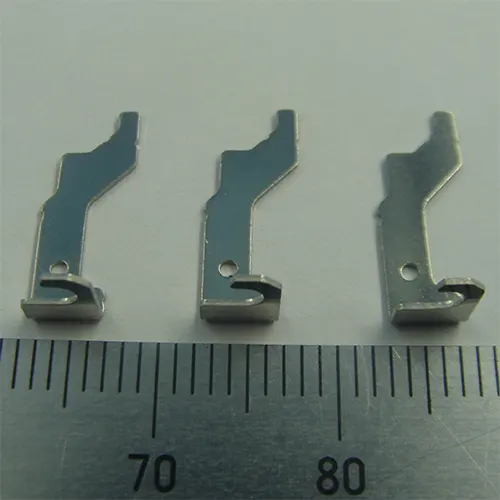
There are various advantages of stamping compared to other methods, which include faster processing time, reduced cost per piece, and consistency in the resultant parts. When it comes to highly accurate parts, the design of the tool enables tolerances as small as ±0.01 mm.
2. How Does the Metal Stamping Process Work?
Product Design and Die Development
The production cycle starts with product design and engineering evaluation. The engineers examine the drawings of the products, 3-D modeling, material choice, and manufacturing needs to create the most appropriate stamping process.
Die design is one of the critical steps in this process, because the quality of these tools will affect the stability of manufacturing and precision of the parts. For large-scale production requirements, progressive dies are typically selected to improve efficiency and maintain consistent output.
Stamping Production and Quality Control
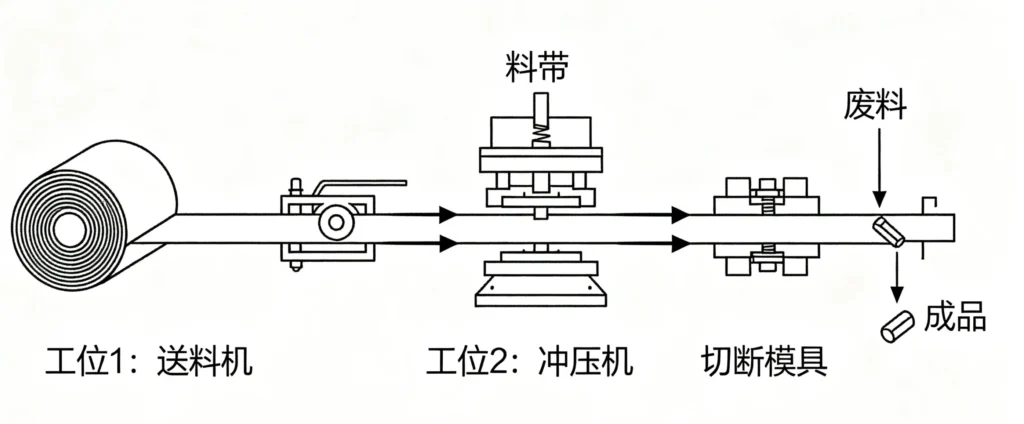
The metal sheets or strip materials are loaded into the stamping machine during the process. The press will then force the punch against the die, resulting in the shaping process by cutting, bending, or forming the material.
The typical stamping workflow consists of several key steps, including material feeding, forming, part removal, and quality inspection. After stamping, the parts are thoroughly inspected through measurements, surface inspections, and quality controls to meet the customer requirements. An effective quality control process is essential.
3. What Are the Types of Metal Stamping Processes?
Various parts will need various processes. Depending on the part design, materials used, and quantity of production, different stamping processes can be used. Hashimoto Precision can offer custom processes, such as precision stamping, bending, and forming.
Blanking Process
Blanking is a fundamental stamping technique that involves cutting metal sheets into desired shapes and sizes. The separated material becomes the finished component. This process is widely used for producing washers, brackets, and small structural parts due to its high efficiency and repeatability.
Piercing Process
Piercing creates holes or openings in metal components through a punching operation. It is commonly used for mounting holes, connection points, and electronic components. Proper die clearance and tooling design help reduce burrs and improve dimensional accuracy.
Bending Process
Bending is an important forming method in the metal stamping process. It shapes metal sheets through controlled pressure without slicing the material. Bending can be used to fabricate metal brackets, machine housings, mountings, and supports, to name a few applications. In the process of bending, there is a need to control the springback effect of the metal as it tries to return to its original shape once the pressure is released.
Deep Drawing Process
Deep drawing bends thin sheet metal parts into three-dimensional structures like housings, enclosures, and cylinders. Deep drawing has to be done with strict regulation of the thickness of the material, forming ratio, and die design to avoid failures like cracks and wrinkles.
Progressive Die Stamping
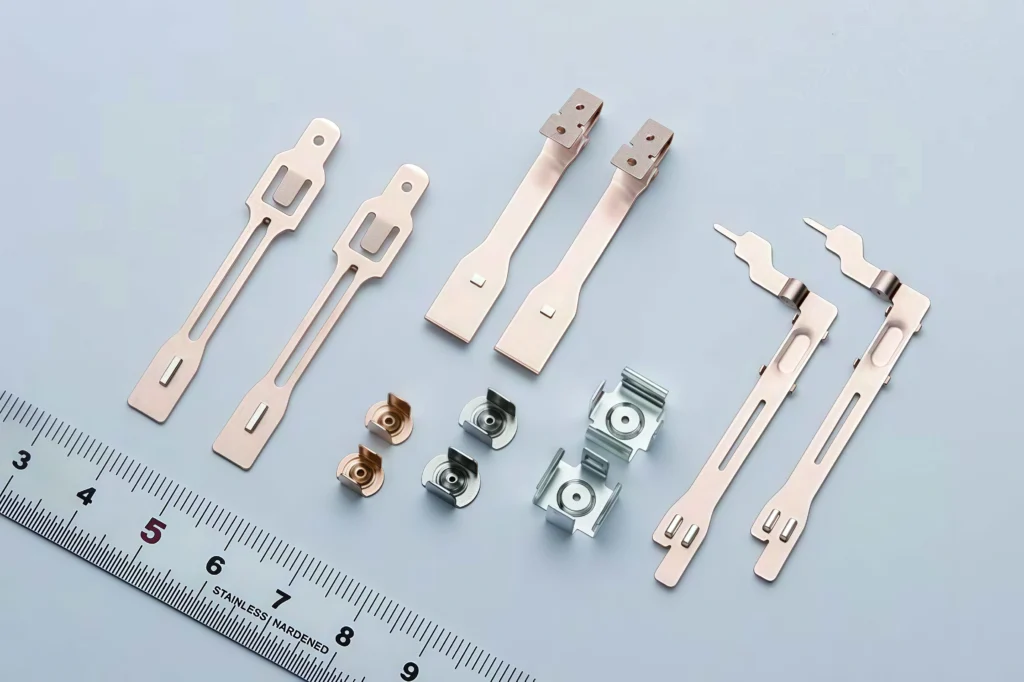
The progressive die stamping process is meant for making a lot of components. A metal sheet is processed in several steps within one die, during which different processes like piercing, bending, and forming take place. This method is highly efficient and provides high-quality parts that can be used in connectors, terminals, and automotive components.
4. What Materials Are Used in the Metal Stamping Process?
Selecting the proper material is important since the material will affect the part’s performance, durability, and manufacturing costs. Various types of materials can be selected depending on the requirements of the metal stamping process.
Stainless Steel
Stainless steel is a good choice when good corrosion resistance, strength, and a quality surface are needed. The most common applications are medical, industrial, and electronic parts.
Aluminum
This material is known for its lightness, corrosion resistance, and good forming properties. Aluminum may be chosen for the manufacture of automobile parts and electronic housings.
Copper and Copper Alloys
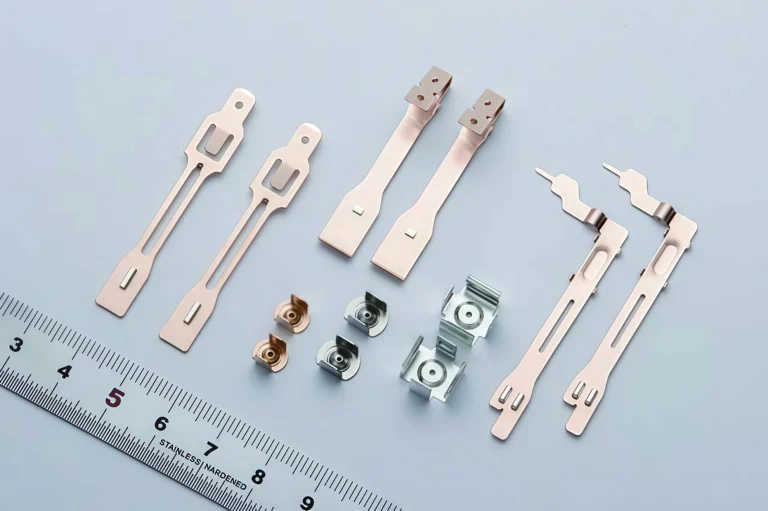
Copper materials are characterized by good electrical conductivity that makes them suitable for electrical terminals, connectors, and other electronic parts.
Carbon Steel
High strength and low cost make carbon steel appropriate for mechanical parts and other industrial applications. Selecting the proper material guarantees good performance and life of the stamped part.
Conclusion
The metal stamping process is a reliable and efficient manufacturing solution that combines precision tooling, advanced equipment, and material expertise. By employing the techniques of blanking, piercing, bending, deep drawing, and progressive stamping, it is possible to manufacture high-quality metal products for different industries.
With extensive manufacturing experience, Hashimoto Precision provides customized metal stamping die solutions and high-precision forming services to meet different production needs. If you have any questions about the metal stamping process, custom stamped parts, or your specific project requirements, please feel free to contact us.