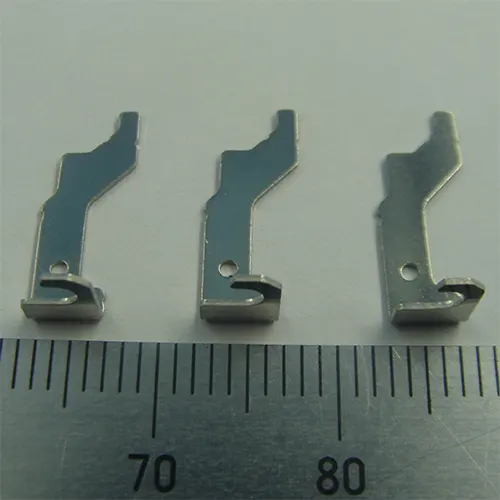


The term “precision die & stamping” refers to the production of metal parts in accordance with precise specifications, geometry, and tolerances. The technology of precision die and stamping implies the use of specially designed dies and presses to stamp or form metal sheets at high speed.
Precision die & stamping differs from ordinary stamping in that precision die & stamping requires accurate specifications of the die, material properties, die clearance, feeding, and press condition. Precision die and stamping is widely used in the manufacturing of electronics, vehicles, electrical appliances, and other products.
What Does Precision Die & Stamping Mean?
The precision die stamping procedure entails the application of a precision stamping die along with a press machine to transform metal sheets or strips into the desired shape. The die will define the shape of the resultant part, while the press will provide the necessary pressure.
Main Components
The presses can be operated at various rates that range from tens to hundreds of strokes per minute. In the case of larger production batches, progressive stamping can manufacture thousands of parts within an hour with the appropriate feeding equipment. A typical system includes:
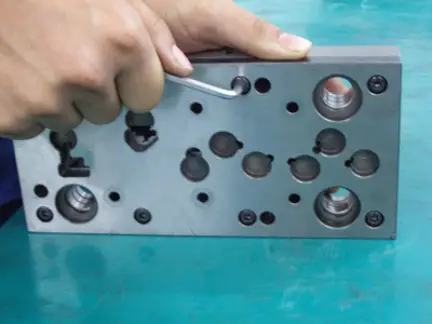
- Stamping die: Contains punches, die blocks, guides, and forming components.
- Press: Creates the necessary pressure to cut and shape.
- Metal material: Examples of metals include stainless steel, aluminum, copper alloy, and carbon steel.
- Feeding system: Aligns metal sheets before each process.
-1024x864.webp)
How Does the Precision Stamping Process Take Place?
To comprehend the working of precision die & stamping, it is important to know about the interaction between the die, press, material, and feeding mechanism. The process starts when sheet or strip metal enters the die at a controlled position.
Process Steps
When large output is required, progressive die stamping is capable of finishing a series of operations within one production pass. One process could be done in one station, another process in another station, and finally blanking in a different station. This helps eliminate manual processes and ensures smooth operation. Some steps in a normal production cycle include:
- Feeding of the material: The metal strip is loaded into the die in a specified pitch.
- Positioning: The material is guided using guides and pilot pins.
- Forming/cutting: The punch performs operations like piercing, bending, blanking, or drawing.
- Part transfer: The formed component moves to the next station or exits the die.
- Inspection: Critical dimensions and surface quality are checked.
- Continuous Production: Recycling manufacturing processes based on production demand.
Why Is Die Design Important?
Molds represent the key core element behind precision die & stamping. Its geometry, material selection, clearance, guiding structure, and surface condition directly influence dimensional accuracy, tool life, and production stability.
Die Design and Trial Production
Before mass production, trial stamping helps verify material behavior, part dimensions, forming quality, and process stability. Considering the possibility of mass production during the trial phase can reveal any possible issues with tooling or process before mass production.
For complex components, a progressive die might have several processes such as piercing, bending, forming, and riveting all at once. The use of manufacturing simulation tools can also be considered to find out forming issues before the trial.
What Determines Stamping Accuracy?
Within precision die & stamping processes, dimensional tolerance is subject to influences beyond stamping equipment performance. Tool construction, material properties, machine stability, and process parameters must work together.
Die Clearance and Material Thickness
Die clearance is particularly important during cutting. Excessively small clearance can increase cutting force and tool wear, while excessive clearance may result in larger burrs and poorer edge quality. For a sheet approximately 1.0 mm thick, the appropriate clearance may be measured in hundredths of a millimeter, depending on material properties and the required edge quality. Therefore, clearance should be determined according to material thickness, hardness, and component requirements.
Tolerance and Process Control
The tolerance standard for precision die & stamping falls between ±0.01 mm and ±0.05 mm, which is contingent on component configuration and material types. Routine checks are indispensable. Progressive die abrasion in high-volume runs may lead to inconsistent dimensions. Major control parameters are as follows:
- Die alignment
- Punch and die wear
- Material thickness variation
- Strip feeding accuracy
- Press stability
- Lubrication and forming conditions
-1024x379.webp)
Which Materials Are Used?
Material selection is an important part of precision die & stamping because different metals respond differently to cutting and forming forces.
Common Materials
- ·Stainless Steel: Possesses high strength and excellent corrosion resistance.
- ·Aluminum: Lightweight and highly malleable.
- ·Copper and copper alloys: Feature great performance in electric and heat conduction.
- ·Carbon & Alloy Steel: Possess high strength and durability.
- ·Thickness of Material: Usually varies between less than 1 mm and several millimeters.
What Are the Main Applications?
Whether basic small parts or elaborate components, they can all be made via precision die & stamping. Its mainstream processes cover blanking, hole piercing, bending, shaping, and deep drawing. When large output is needed, progressive stamping completes various forming steps in a single cycle. Widely seen applications are as follows:
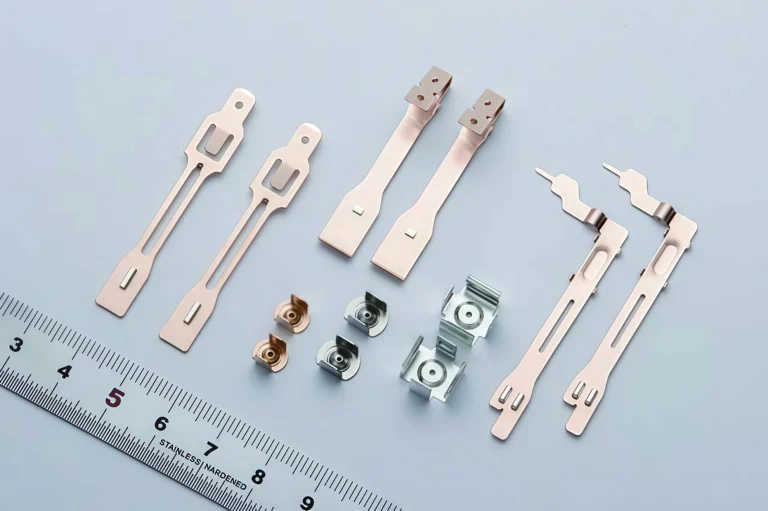
- Electronic terminals and connectors
- Automotive brackets and clips
- Electrical contacts
- Industrial hardware
- Precision metal housings
- Small structural components
Why Is It Suitable for Mass Production?
Repetition is a definite strength of precision die & stamping, since once the tooling, feed of materials, press settings, and process of deformation are confirmed to work correctly, then the same shape can be replicated in large quantities.
From Trial Stamping to Mass Production
Evaluating mass-production feasibility during the trial stage can reduce later tooling modifications and production risks. This is particularly valuable for components that begin with small quantities but may require larger production volumes later. A controlled development process generally includes:
- Trial production: Verifies part geometry, material behavior, and forming feasibility.
- Die development: Refines tooling according to trial results.
- Process validation: Confirms dimensional accuracy and production stability.
- Mass production: Uses validated tooling and process parameters for continuous output.
What Should Manufacturers Consider?
A complex component may require a sophisticated progressive die, while a simpler part may be produced more economically with a conventional stamping configuration. Before selecting a precision die & stamping process, manufacturers should evaluate several factors together:
- Required dimensional tolerances
- Material type and thickness
- Part geometry and complexity
- Expected production volume
- Required stamping speed
- Tooling cost and expected tool life
- Possibility of progressive or multi-operation stamping
- Requirements for trial production and future mass production
Conclusion
Precision die & stamping uses specific tooling, press control, material feeding, and process control to produce metal components consistently at high volume. It involves various elements, including die design, material type, clearance, press control, and production control.
To decide which manufacturing method is the best option for your project, manufacturers need to consider these aspects altogether. Hashimoto Precision is equipped with experience in die design, trial development, and mass production for various metal stamping needs. Please feel free to contact us if you have any queries or need help with selecting a configuration.