


Numerous factors influence the quality of Metal Stamping Products, apart from the stamping machine itself. Properties of the metal used, die design, manufacturing conditions, accuracy of the equipment used, and quality control processes are among such factors. Any deviation in metal thickness or die clearance could cause dimensional inaccuracy, formation of burrs, cracks, or deformation. If a manufacturer produces precision components in batches of several thousand or millions of pieces, it is important to keep these factors under control to ensure quality and minimize production losses.
Control of the whole process, starting with the choice of material and ending with final inspection, is crucial to having a good stamping process. Below are some factors that will help to understand how manufacturers can improve their products.
1. Material Selection and Properties of Metal Stamping Products
Material Type and Grade
The selected material plays an important role in forming performance, component strength, surface condition, and service life. Popular materials used in metal stamping include carbon steel, stainless steel, aluminum, copper, and brass. Every material has different hardness, ductility, tensile strength, and springback properties.
For instance, stainless steel requires a higher forming force as compared to aluminum, while copper and brass provide excellent conductivity for some parts. The material grade should be chosen based on the requirements related to mechanical properties, resistance to corrosion, electrical conductivity, and application environment.
Material Thickness and Consistency
Sheet material must be of uniform thickness during production. Even a deviation of 0.05 mm may influence forming depth, accuracy of dimensions, and die clearance during manufacture of precise parts. It is necessary to control the coil material before feeding it to the stamping line. Consistent thickness also helps maintain stable feeding and forming conditions. If the material varies significantly, Metal Stamping Products may show differences in height, flatness, hole dimensions, or edge quality.
Material Strength and Formability
The tensile strength, yield strength, elongation, and hardness of the material influence its deformability without cracking or excessive distortion. Materials with higher strength may require greater press force, while materials with better elongation can generally withstand deeper forming operations.
Engineers should evaluate these properties together with the required shape. A component with a deep draw or sharp bend may require a material with sufficient ductility, while a structural component may prioritize strength and stiffness.
2. Die Design and Tooling for Metal Stamping Products
Die Structure and Precision
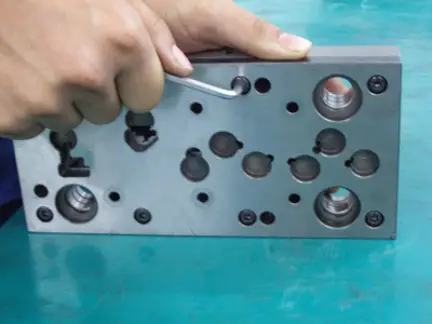
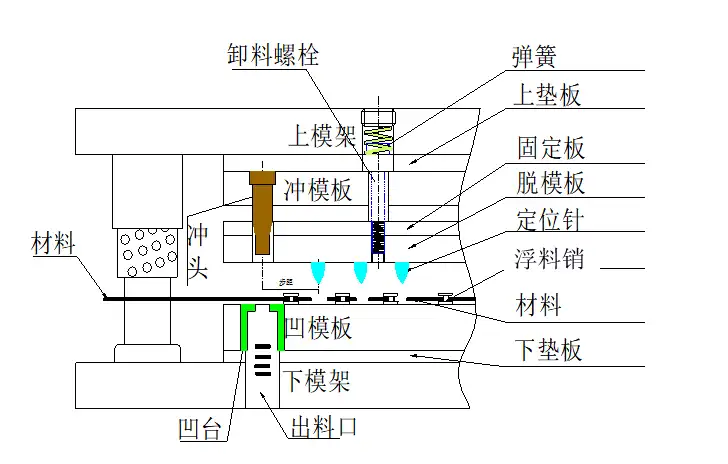
The die defines how the sheet metal is to be cut, bent, drawn, or formed; thus, its structure should correspond to the geometry of the part, thickness of material, and tolerances. Improper design of the die may result in poor forming of the part, formation of burrs, cracks, and variations in dimensions. For precision Metal Stamping Products, accurate tooling is especially important when components have complex shapes or tight dimensional requirements.
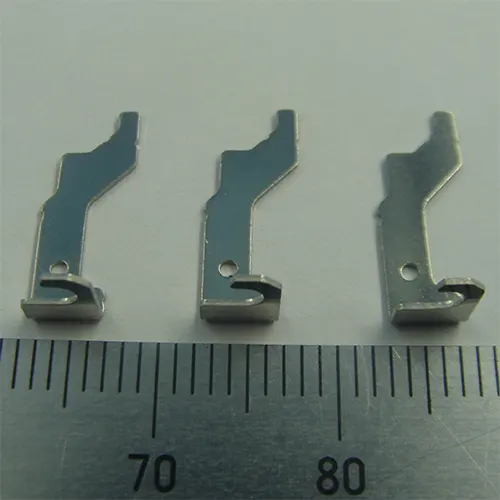
For manufacturers requiring precise components with complex geometries, Hashimoto Precision’s SUS301 Metal stamping shrapnel is a practical choice. The product supports material thicknesses from 0.02 to 3.00 mm and can achieve stamping accuracy of up to ±0.001 mm. Manufactured using a 60–80 ton punch press, it is designed to provide consistent dimensions for precision stamping applications.
Die Clearance and Alignment
The gap between the punch and die, known as die clearance, should be determined by the material type and thickness. As a general example, a clearance of approximately 5%–10% of material thickness may be suitable for some applications, but the actual value depends on material properties and the required cutting quality.
Incorrect clearance can cause excessive burrs, poor shearing surfaces, or increased tool wear. Alignment of the punch, die, and material should also be accurate since it influences the dimensions of the part and the life of the tools.
Die Material and Wear Resistance
Die materials must withstand repeated impact and friction during high-volume production. D2 steel or another kind of hard alloy is the usual choice when selecting material for the application with increased wear resistance. Die condition directly affects Metal Stamping Products quality over time. If the cutting edge becomes worn, burr height and variations may increase. Inspection and sharpening are required to ensure stable operation of the machine.
3. Stamping Process Parameters for Metal Stamping Products
Press Speed and Force
Speed and force of the press must be adequate for the particular material and the process of manufacturing. Too much speed causes vibration, heating, and deformation of the material; lack of force prevents the forming or cutting process. A press operating at the speed of 60-200 strokes per minute can be chosen for high-production operations, though it will depend on part geometry, material used, die design, and capabilities of equipment.
Feeding and Positioning Accuracy
Feeding is necessary to ensure that the material or sheet enters the die at the correct position. Lack of feeding leads to shifting of holes, bending, or other features, causing dimensional mistakes. In the case of Metal Stamping Products with tight tolerances, automated feeding machines with sensors and guides can help to provide the proper positioning of the material.
Lubrication and Forming Conditions
Correct lubrication decreases friction between the material and tooling, which prevents the material from being scratched or galled and from causing excessive wear on the tool. Depending on the material and process of stamping, proper lubrication and its application methods should be chosen. Temperature, cleanliness of material, and lubricant consistency might also affect the outcome of the stamping process. Stable conditions allow manufacturing companies to obtain repeatable Metal Stamping Products.
4. Equipment Performance and Dimensional Tolerances
Stamping Machine Precision
The stamping press must provide sufficient force, rigidity, and repeatability for the The press used for stamping should be able to generate enough power, rigidity, and repeatability in the process. Press vibrations, excessive backlash, or poor stroke control might hurt the outcome of the process. If the stamping is used for high-precision products, the press repeatability should be checked against the required tolerance of the part, not just by press tonnage. A 100-ton press will be sufficient to produce the necessary power, but it still needs to be precise.
Dimensional and Geometric Tolerances
Dimensional tolerances define the acceptable variation in features such as length, width, hole diameter, bend angle, and thickness. A tolerance of ±0.05 mm is significantly more demanding than ±0.20 mm and may require tighter control of tooling, material, feeding, and inspection.
Geometric characteristics such as flatness, perpendicularity, and concentricity can also affect how Metal Stamping Products perform during assembly. Tolerances should therefore be established according to actual functional requirements rather than making every dimension unnecessarily tight.
Equipment Stability and Maintenance
Maintenance ensures that the stamping machines perform within their designed limits. Lubrication of moving parts, inspection of guide rails, inspection of fastening devices, and observation of the press condition help to minimize unexpected variance. Maintenance procedures are critical in continuous manufacturing. Constant equipment conditions enable manufacturers to achieve consistent dimensions and minimize equipment downtime, scrap, and unexpected repairs to tooling.
5. Surface Finishing and Quality Control
Deburring and Surface Treatment
Cutting and forming may produce burrs, sharp edges, and other surface irregularities. The deburring process could include any number of mechanical procedures depending on the nature of the work. Surface finishing through plating, coating, or passivation could follow. The particular surface finishing method used should be compatible with both the material and intended application.
Dimensional and Appearance Inspection
Inspection should encompass both dimensional characteristics and visible defects. Common inspections include length, width, diameter of hole, thickness, bend angle, burr height, surface scratches, deformation, and cracks. Inspection devices such as calipers, micrometers, gauges, optical measurement, and automated vision systems may be utilized for high-volume metal stamping products based on required tolerances and manufacturing quantity.
Process Monitoring and Final Inspection
Quality control is most effective when implemented throughout the production process and not just at the end. First-piece inspection can confirm correct tooling and set-up of machinery, whereas in-process inspections will detect any changes that may occur. Final inspection is another level of checking before shipping.
Through material inspection, process inspection, dimensional inspection, and appearance inspection, manufacturers can maintain better consistency in Metal Stamping Products quality.
Conclusion
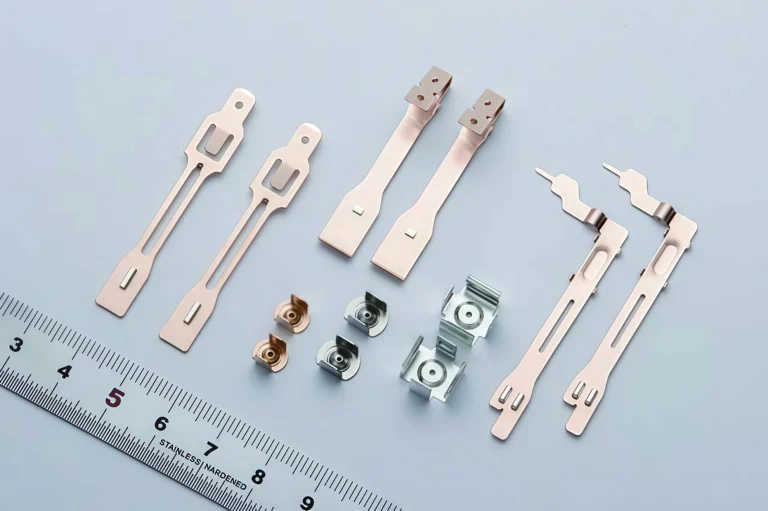
Metal Stamping Products quality relies on the interplay of the material’s characteristics, die design, process, machine accuracy, and quality inspection. Quality materials and proper dies make up the base for this, with proper conditions during stamping and maintenance ensuring there is a repeatable process. Inspections and surface finish make sure that the final products have the right dimensional and aesthetic characteristics. If you require consistent precision during manufacturing of your product, you can control the mentioned factors at the very beginning of the process and thus minimize the risk of defects and material wastage. If you need to know more about precision metal stamping or have any other questions, do not hesitate to contact Hashimoto Precision.
-768x431.webp)