
Before mass production, physical prototypes may point to issues that do not become apparent when viewing the product on a computer. Dimensions, materials used, assembly, durability, and ergonomics can all be examined during this phase. In cases where products come from manufacturers in industries like medical devices, vehicles, electronics, and heavy equipment, prototype testing becomes especially important.
Selecting the right Prototyping Company for the task is, therefore, about more than just choosing the most cost-effective solution based on quotations. Processes of manufacture, choice of materials, dimensional tolerance, turnaround time, quality management, and scale of production are all factors. In 2026, there will be a number of specialized suppliers offering services like CNC machining, 3D printing, sheet metal fabrication, metal stamping, and injection molding. Below are five companies to consider because of these and other specializations
1. What Should You Consider in a Prototyping Company?
A suitable Prototyping Company should be able to match its manufacturing capabilities with the technical requirements of a project.
Manufacturing Processes
The available manufacturing processes determine what types of prototypes a supplier can produce. Common options include:
- CNC machining: Suitable for precision metal and engineering plastic parts.
- 3D printing: Useful for complex geometries, visual models, and rapid design verification
- Sheet metal fabrication: Suitable for brackets, enclosures, frames, and structural components.
- Injection molding: Useful when plastic parts need to be tested under conditions closer to mass production.
- Metal stamping: Suitable for thin, lightweight, and high-volume metal components.
A Prototyping Company with several manufacturing processes can provide more flexibility when a project changes during development.
Material and Precision
The choice of materials must also be appropriate to the specific applications. These may include stainless steel, carbon steel, aluminum, copper, engineering plastics, and resins depending on their strength, weight, conductivity, corrosion resistance, and appearance.
Prototype-to-Production Capability
Dimensional accuracy is yet another significant aspect. For precise CNC parts, some of the manufacturing services may offer dimensional tolerances of about ±0.020 mm, although it will depend on the material type, geometry, process, and inspection technique. It is therefore advisable for companies to verify the technical tolerances for specific parts rather than specifications only.
A prototype is often only one stage of product development. If the final project requires small-batch or mass production, it can be useful to work with a Prototyping Company that can continue manufacturing after the prototype has been approved.
This approach can reduce the need to change suppliers, repeat material qualification, or redesign manufacturing processes. It may also make the transition from prototype tooling to production tooling more efficient.
2. 5 Best Prototyping Companies in 2026
Each of the companies above has different strengths; thus, the choice will depend on the product, materials, developmental stage, and amount of manufacturing expected.
1. Xometry — On-Demand Prototype Manufacturing
Xometry offers on-demand manufacturing combined with a big network of suppliers. Their service portfolio includes CNC machining, 3D printing, sheet and tube metalworking, injection molding, and more.
This platform is tailored for supporting a wide variety of projects, including individual prototypes and higher-volume manufacturing. It offers 3-, 4-, and 5-axis machining, turning, drilling, and wire EDM. In some cases, tolerance can be below 0.001 inches, depending on the manufacturing method and the design of the component. In cases where various materials, geometries, or production quantities are used by the company, this diversified manufacturing network can offer a lot of flexibility regarding sourcing.
2. Protolabs — Rapid Digital Manufacturing
Protolabs is known for its digital manufacturing model and rapid production services. Its capabilities include CNC machining, 3D printing, injection molding, and sheet metal fabrication, covering both prototyping and production requirements.
For certain CNC projects, its published information indicates that parts can be produced in as little as one day, depending on specifications and order requirements. Its digital quotation and design-for-manufacturing analysis also allow engineers to identify potential production issues before manufacturing begins. This makes Protolabs a practical option for product teams that need to test designs quickly and make several changes during the development process.
3. HSK Precision —Precision Metal Prototyping
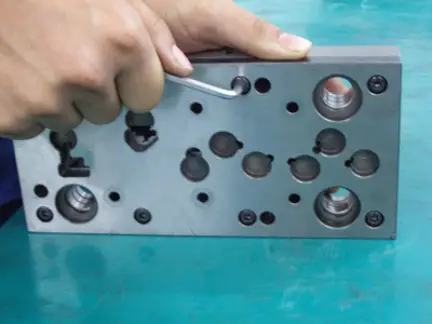
HSK Precision specializes in precision metal stamping, tooling, and custom metal parts. The manufacturing services provided by the company allow for manufacturing at various product development stages, from mold design through prototyping and mass manufacturing. This makes it an ideal choice when there is a need for the development of a prototype with further manufacturing in mind.
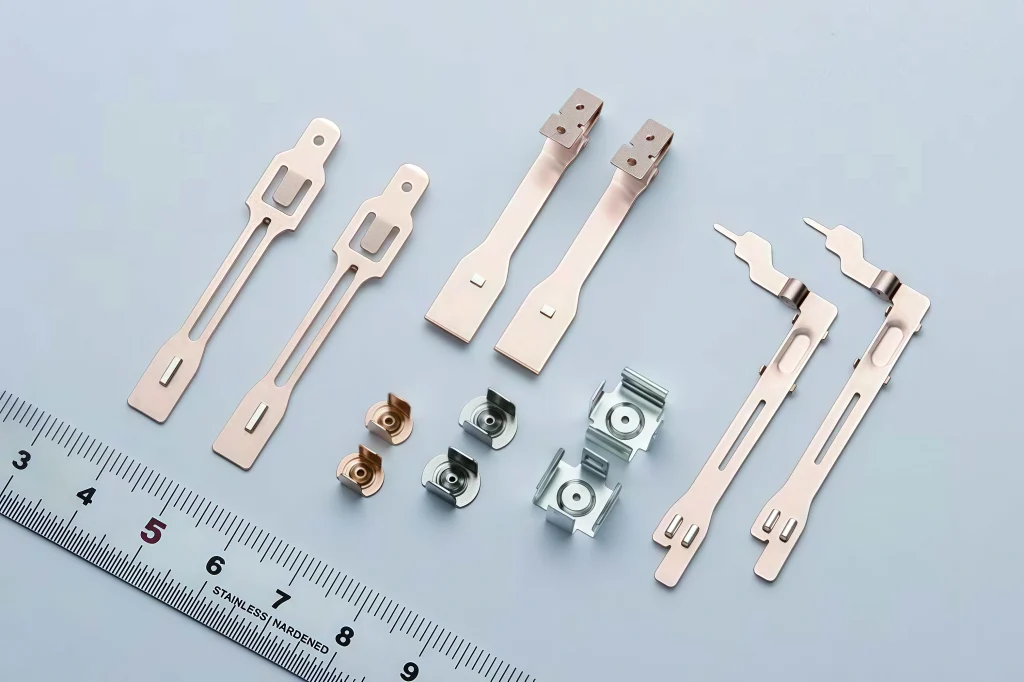
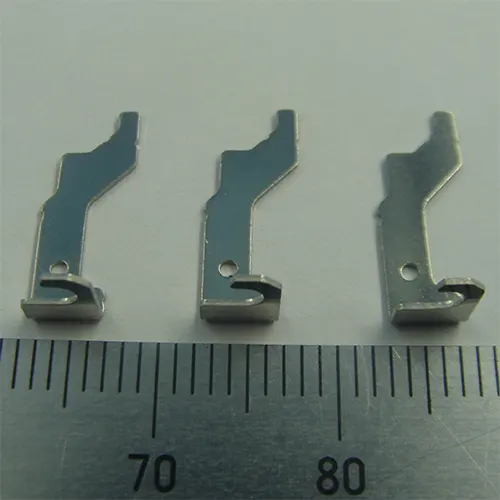
Prototypes available from HSK Precision include precision metal parts, parts for medical devices, mounting brackets, structural components, spring contacts, and terminals. Possible materials may include stainless steel, carbon steel, aluminum, and other metals, depending on the application. When customers need assistance with the development of metal components, HSK Precision is a very relevant choice because its development process may encompass such stages as design review, material selection, tooling design, prototyping, design improvements, and final production.
4. Fictiv – Fast Prototype Development
Fictiv focuses on rapid manufacturing and digital project management. Its services include CNC machining, 3D printing, urethane casting, and injection molding.
Its published manufacturing information indicates that some CNC parts can be produced in approximately one day, while selected 3D printing services can also have turnaround times of around 24 hours. Injection molding projects may require longer preparation, with some first samples available in approximately 10 days. Fictiv is therefore well suited to product development teams that need physical samples quickly. Its design-for-manufacturing feedback can also help engineers address potential production problems before committing to a larger manufacturing run.
5. Protolabs Network — Multi-Process Prototyping
Protolabs Network, formerly known as Hubs, provides access to multiple manufacturing processes through a global network. Available services include CNC machining, 3D printing, injection molding, and sheet metal fabrication.
The platform supports several additive manufacturing technologies, including FDM, SLA, SLS, and MJF. Some CNC projects can start with lead times of approximately five working days, while selected 3D printing processes may begin at around one working day. This combination makes Protolabs Network useful for engineering teams that want to compare manufacturing methods, materials, and production approaches within one sourcing platform.
3. Comparison of the Top 5 Prototyping Companies
The differences between each Prototyping Company become clearer when manufacturing scope, materials, precision, and production support are considered together.
| Company | Key Strength | Main Processes | Typical Capability | Production Scope | Best Fit |
| Xometry | Large manufacturing network | CNC, 3D printing, molding | Precision machining below 0.001 in* | One-off to high volume | Multi-process sourcing |
| Protolabs | Rapid digital manufacturing | CNC, 3D printing, molding | CNC tolerances around ±0.020 mm* | Prototype to production | Fast product development |
| HSK Precision | Precision metal prototypes | Metal stamping, sheet metal | Metal thickness around 0.02–3.00 mm | Prototype to mass production | Medical, electronics, automotive |
| Fictiv | Fast prototype delivery | CNC, 3D printing, molding | Selected CNC parts from 1 day* | Prototype and low-volume production | Rapid design iteration |
| Protolabs Network | Multi-process sourcing | CNC, 3D printing, molding, sheet metal | CNC from around 5 working days* | Prototype to production | Complex sourcing needs |
The table also shows why there is no single Prototyping Company that is ideal for every project. Precision metal components may require a supplier with strong stamping and tooling capabilities, while complex plastic geometries may benefit from 3D printing or injection molding. For projects with frequent design changes, rapid manufacturing can be more important than production volume.
4. Conclusion
The five prototyping companies mentioned above have different approaches to prototype manufacturing. Some of them provide precise metal forming services, whereas others use digital manufacturing, fast delivery, process variety, or flexible production facilities. This information may come in handy when engineering and procurement teams compile the list.
In addition, before making an order, it is useful to specify the material to be used, the tolerance of the product, its surface finish, the number of prototypes, testing requirements, and the planned production volumes. This technical specification will enable the chosen Prototyping Company to suggest a manufacturing process suitable for prototype and further product development.
-768x431.webp)