

Manufacturing dilemmas faced by procurement managers and mechanical engineers occur whenever one needs to decide whether to buy fast stamping services or use the ultimate flexibility of CNC machining. Both technologies underlie all modern industries, including the manufacture of automotive chassis, electronic equipment, medical devices, aerospace hardware, and so on. However, both methods use different physics, economics, and geometry. There is no one-size-fits-all choice. Decades of experience gained at Hashimoto Precision show that the answer depends on the place of your part in the product life cycle.
1. What Are Stamping Services and CNC Machining?
In order to make an informed sourcing decision, one has to understand how raw metal is turned into the part using either technology.
How Stamping Services Work
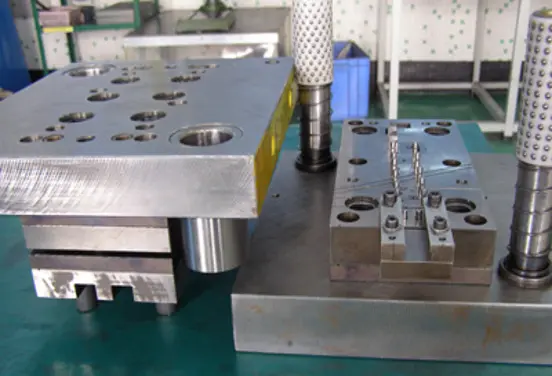
Professionally stamped metal parts are made using heavy-tonnage presses and dies. The presses do not cut metal but force sheet metal, strips, and coils to undergo plastic deformation or clean shearing. Processes of blanking, punching, bending, and deep drawing take a fraction of a second. Since the geometry of the stamping is already defined by the die for each stroke of the ram, the process speed is measured in milliseconds and can hardly be matched for making uniform and thin-walled metal parts.
How CNC Machining Works
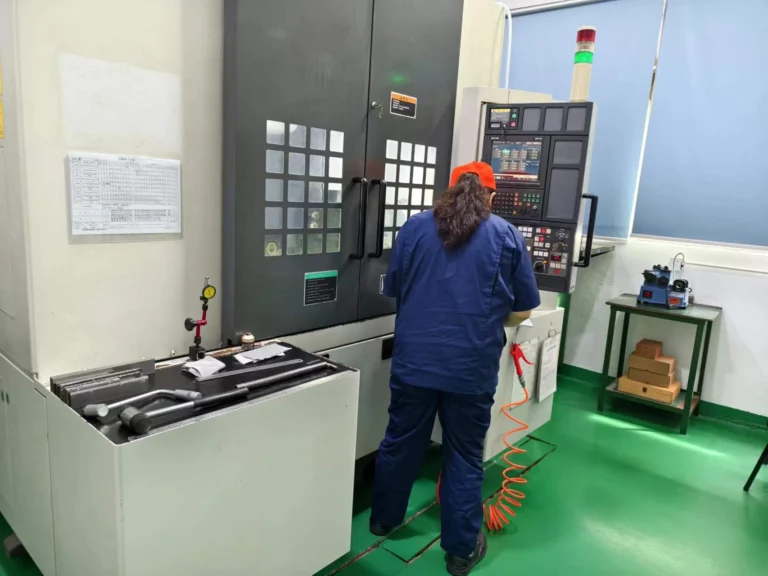
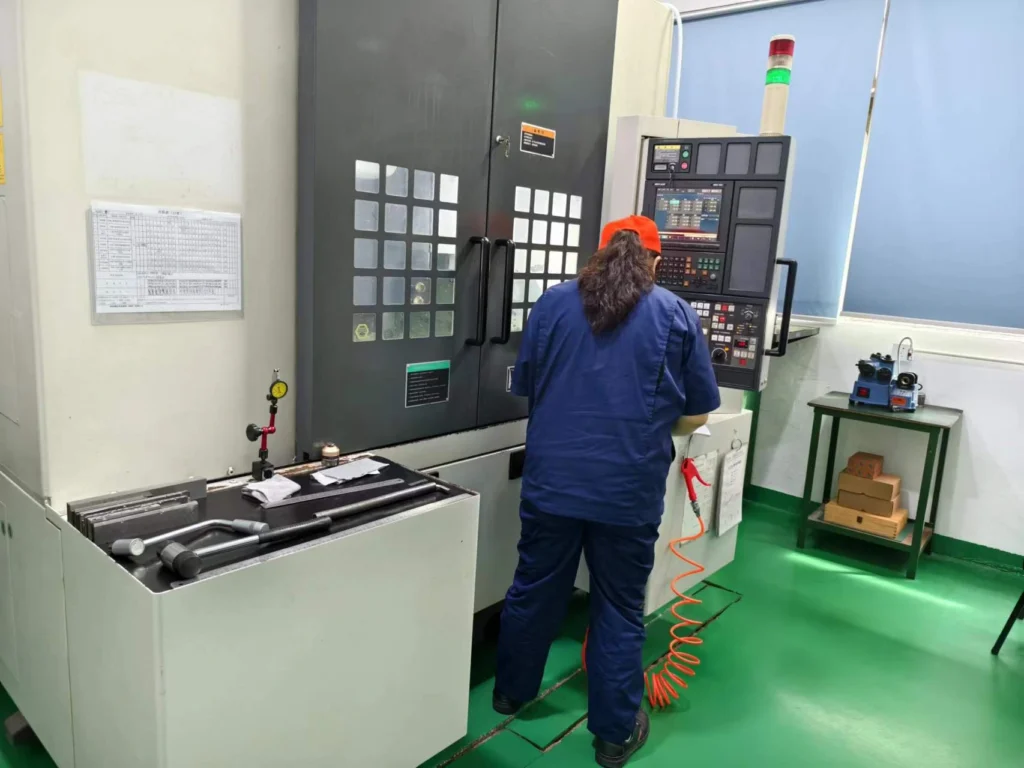
The CNC (computer numerical control) technology stands for a subtractive manufacturing process, which is the complete opposite of the former one. It uses a solid block, billet, or forging of material as a starting point. Multi-axis CNC milling machines and lathes rotate carbide tools at tens of thousands of RPMs in order to chip off material following a pre-programmed toolpath. No special tooling is needed. 3-axis, 4-axis, and 5-axis machining centers can machine parts to tolerances of ±0.005 mm.
2. Stamping Services vs. CNC Machining: Key Differences
When comparing stamping services directly against CNC milling or turning, the operational trade-offs become obvious across six core engineering metrics:
| Evaluation Metric | Stamping Services | CNC Machining |
| Core Mechanism | Plastic deformation and shearing | Subtractive cutting (milling/turning) |
| Standard Tolerance | ±0.05 mm to ±0.10 mm | ±0.005 mm to ±0.01 mm |
| Production Speed | Ultra-fast (30 to 800+ strokes per minute) | Moderate (minutes to hours per piece) |
| Upfront Tooling Cost | High (custom progressive or transfer dies) | Low (standard cutters and CAM programming) |
| Material Utilization | High (optimized strip nesting minimizes scrap) | Lower (substantial chip waste from solid blocks) |
| Ideal Raw Stock | Ductile sheet metal coils and strips | Solid metal billets and engineering plastics |
3. Cost and Production Efficiency: Which Is More Economical?
Unit economics tend to decide the battle in supplier qualification, especially in going beyond the engineering build phase.
Volume Cut-Off and Break-Even Analysis
For High Volume Production: After passing the volume threshold of 10,000-20,000 units per year, stamping services become extremely cost-efficient. Even though a hardened steel progressive die requires large initial investments, splitting the cost over hundreds of thousands of pieces brings down the piece price to pennies.
For Pilot and One-off Projects: Paying thousands of dollars for a custom die for production below 500 pieces is economically meaningless. CNC machining does not require upfront tooling expenses, therefore making the overall project budget small for low-volume orders.
Lead Time and Supply Chain Flexibility
Creation, heat treatment, and qualification of a precision die take two to four weeks on average. But as soon as the press gets tuned, it can start producing thousands of identical parts every day. Meanwhile, CNC shops produce first articles in 24 to 72 hours, but to scale a CNC line up to 50,000 pieces per month will tie up many spindle machines for weeks.
4. Is It Possible To Combine Stamping Services and CNC Machining?
Modern manufacturing seldom puts engineers in an ultimatum situation. Many complex assemblies find their optimum in a hybrid production approach where stamping services go hand-in-hand with further CNC work.
Stamping Followed by CNC Machining
In a typical hybrid workflow, first, the high-speed stamping services form the main body of the assembly, brackets, and flanges from sheet metal in seconds. Next, the resulting blanks get sent to CNC machining for secondary processing such as threading internal holes, boring bearing seats, or milling precise flat surfaces for sealing.
Optimal Balance of Performance and Precision
This combination leverages the throughput and materials savings of sheet metal forming while leaving costly spindle time only for critical mating features.
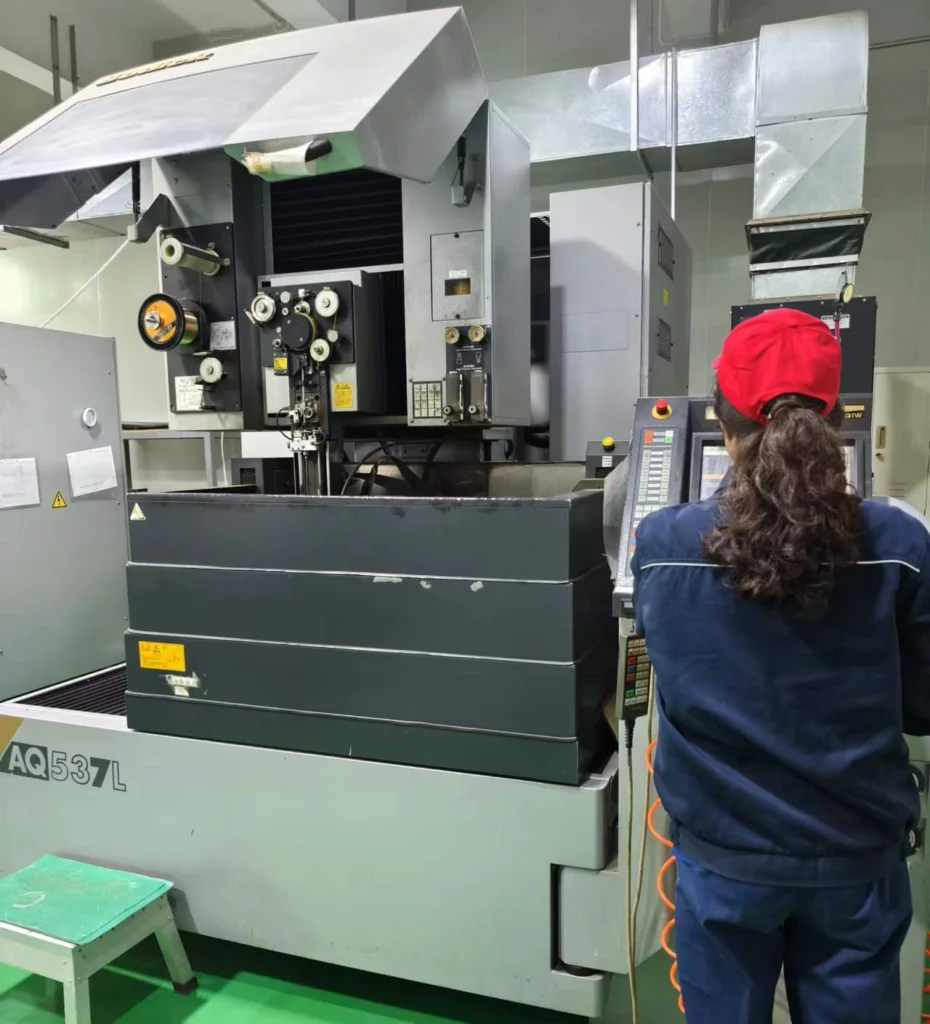
5. How To Decide Between Stamping Services and CNC Machining?
In your DFM review, compare your parts with the advantages of each production technology.
When Should You Go With Stamping Services?
Medium-To-High Volumes: Your annual projection is more than 10,000 units, with the design finalized to avoid future changes and thus amortize the cost of the die.
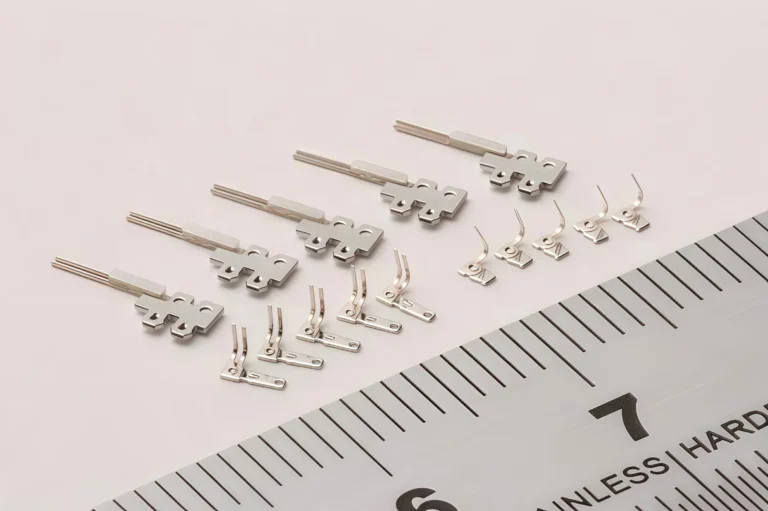
Thin-Walled Designs From Sheet Metal: The component has uniform wall thickness—between 0.2 mm and 6.0 mm—with bends, embossments, louvers, or drawn cups; EMI shields, battery contacts, and car brackets fall into this category.
Industrial Level Tolerances: Assemblies will function properly within ±0.05 mm tolerance with no need for mirror-finished cuts.
Flexible Schedule: Your schedule can accommodate the two- to four-week die creation in return for rapid continuous production.
When Should You Go With CNC Machining?
Rapid Prototyping and Smaller Batches: The volume of the order is 1 to 500 pieces, or your R&D department anticipates many iterations changing the geometry and making the physical die useless.
Solid 3D Geometric Shapes: The design contains deep pockets, undercuts, variable wall thicknesses, or aerospace/medical surfaces impossible to manufacture from flat sheet.
Micron Precision Requirements: Mating interfaces have tolerances between ±0.005 mm and ±0.01 mm with Ra 0.8 μm surface roughness or smaller.
Urgent Deliveries: You require a functional prototype on your desk in 2-3 days for fitting, thermal testing, or investors’ presentation.
Conclusion
In the end, stamping services and CNC machining address two sides of the industrial production equation—throughput and material efficiency vs. geometric freedom and fast turnaround. At Hashimoto Precision, our engineering team combines the production lines of high-speed stamping and multi-axis CNC machining under one roof and analyzes your CAD drawings, required tolerances, and annual volumes to recommend the most cost-effective production solution. If you have any questions about stamping services, CNC machining, or a hybrid approach, please contact us anytime. We will be happy to analyze your prints and offer a quotation.