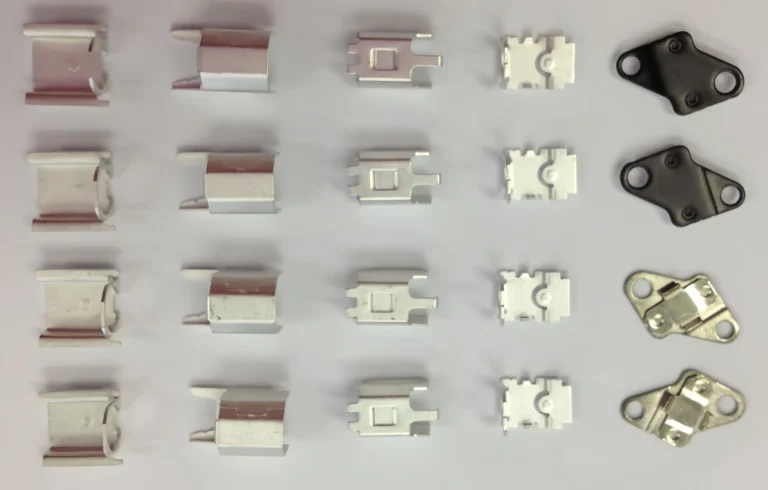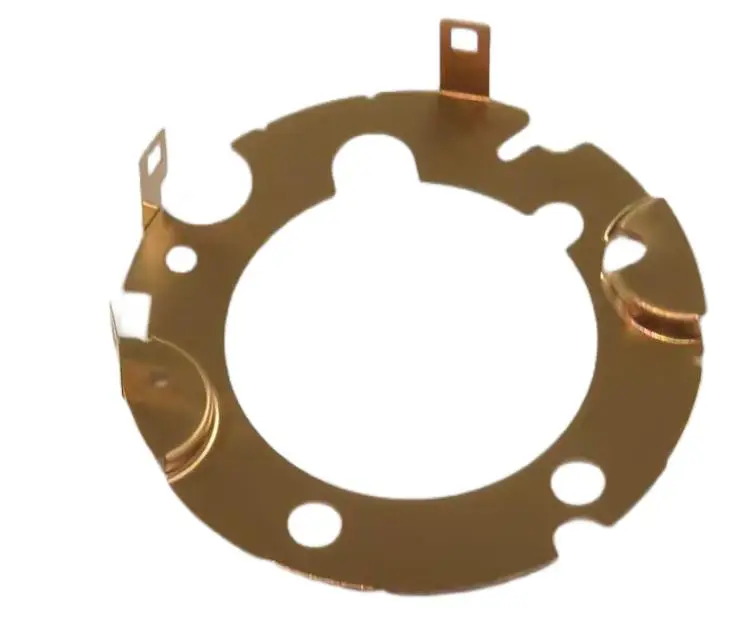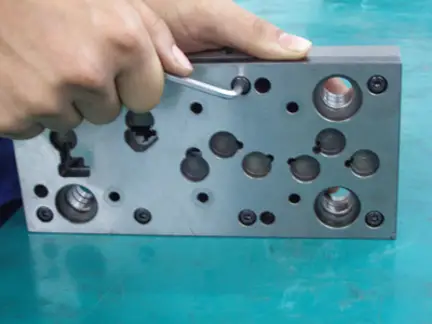


A stamping die is a crucial metalworking tool utilized in cutting, bending, piercing, or shaping sheet metal into particular forms. Stamping dies are common in the making of automotive brackets, electrical terminal parts, and other appliance components and hardware. Different types of dies can be utilized for various production purposes. Knowing how dies work and their uses will assist in selecting the most appropriate die type based on part complexity, volume of production, and cost of manufacturing.
1. What Is a Stamping Die?
A stamping die is a precision-engineered tool installed in a stamping press to form sheet metal into accurately defined shapes. Some common features of stamping dies are the punch, die blocks, guide components, and stripper plate. When the press works on the material, it will make a certain form or feature depending on the design of the tool. The process may consist of cutting, piercing, bending, or forming depending on the type of die used.
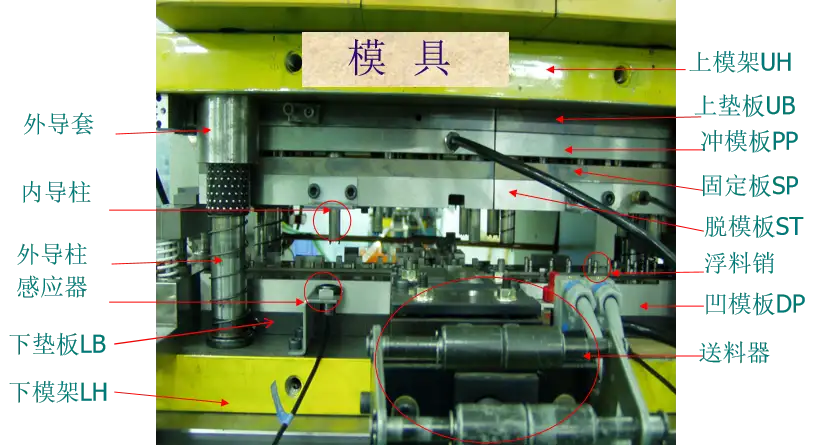
How Does a Stamping Die Work?
The process begins by feeding sheet metal or coil stock into the press. The punch then moves toward the die to perform the required operation. A typical stamping cycle involves:
- Sheet feeding: Proper positioning of the sheet or strip.
- Stamping or shaping: Pressure application for holes, shapes, and bends.
- Release of the part: Stripping or ejection methods used to remove the workpiece.
- Material advancement: Moving the stock to the next station when multiple operations are required.
For instance, a 1.0 mm steel sheet can be punched and bent into a mounting bracket. The required clearances and allowances will vary depending on the material quality, shape, and tolerance levels.
Why Are Different Stamping Die Types Used?
Different parts have different stamping sequences. Some parts can undergo stamping only in the cutting phase, while some parts may need several piercing and bending stages. Selecting the right stamping die allows manufacturers to find the best compromise between:
- Production speed and automation requirements.
- Part complexity and dimensional accuracy.
- Initial tooling costs and long-term production expenses.
- Material utilization and scrap generation.
2. What Are the Major Categories of Stamping Dies?
There are four main types of stamping dies,s including single, progressive, compound, and transfer dies. They vary according to the arrangement of processes and the flow of material inside the tool.
Single-Stage Stamping Dies
A single-stage die is capable of completing one major stamping process per cycle. If the component needs other processes, it will have to use other tools or stages. This die type works well for basic components, prototyping applications, and limited production quantities.
Key advantages include:
- Relatively simple design and maintenance.
- Lower initial investment for straightforward applications.
- Flexibility when producing different part designs.
Nevertheless, multiple operations could take longer to carry out and would result in increased labor costs. For instance, if a manufacturer is manufacturing 2,000 brackets, different dies for piercing and bending could be used if using one for both is uneconomical.
Progressive Stamping Dies
The progressive die has a series of stations positioned along a continuous metal strip. Each station carries out an operation as the metal strip is moved along at a set pitch. After the process attains its maximum output, a part would be manufactured with every next press stroke. Typical examples of items include electrical terminals, clips, connectors, and other precision items.
Main benefits:
- High production output.
- Reduced manual handling between operations.
- Consistent positioning through controlled strip feeding.
- Compatibility with automated coil-fed presses.
For instance, a six-station die would carry out operations like piercing, notching, forming, and cutting sequentially. The number of stations would depend on the design of the item. The progressive stamping die would require an accurate strip layout, proper feeding, and enough press tonnage. Despite being expensive initially, it could still be economical in some cases.
Compound Stamping Dies
A compound die allows multiple cutting operations to be performed at the same die station within a single stroke of the stamping press. This type of die becomes especially handy when flat pieces need to have precise interrelationships among holes and outer shapes. Examples of such work include washers, flat plates, gaskets, and some electrical parts.
Key advantages:
- Multiple cutting features produced in one stroke.
- Consistent positioning between related features.
- Reduced intermediate handling.
- Efficient production of suitable flat parts.
Compound dies are not appropriate for workpieces that require several bends or forming operations. They should also take into consideration cutting pressures, scrap disposal, and slug control.
Transfer Stamping Dies
Transfer dies use special machinery to feed separate blanks or pieces to be formed from one station to another. In contrast with progressive dies, which operate with blanks being part of a single long piece, transfer dies work with separated blanks during each operation.
Main advantages:
- Multiple forming stages arranged in sequence.
- Flexible positioning between stations.
- Support for complex part geometries.
- Automation to lessen the need for manual handling.
The transfer systems will also need precise alignment and movement of stations, along with other hardware. But the expenditure could be worth it depending on the size, complexity, and demand for the part being manufactured.
The following table summarizes the main differences:
| Die type | Main operation | Typical applications | Key consideration |
| Single-stage | One primary operation per stroke | Simple parts, prototypes | Additional handling may be required |
| Progressive | Processes continuous strip material through multiple stations | Terminals, clips, connectors | Requires precise material feeding |
| Compound | Performs multiple cutting or punching operations at a single station | Washers, flat plates | Best suited for parts that primarily require cutting or punching operations |
| Transfer | Individual parts move between stations | Complex formed components | Requires transfer equipment |
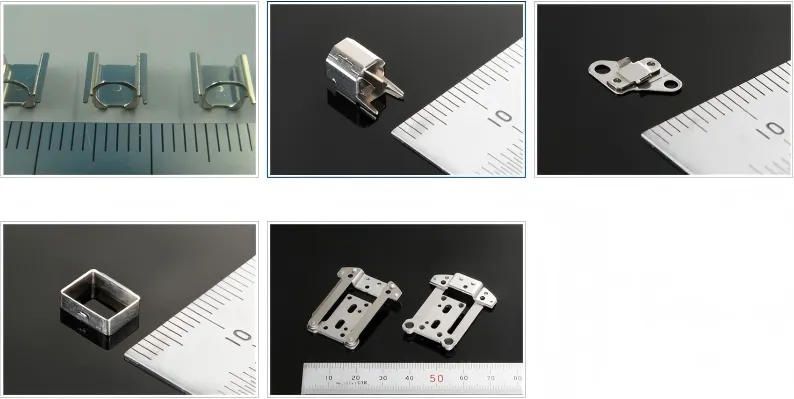
3. How to Select the Proper Stamping Die?
When choosing a good stamping die, one has to take into account part design, volume of production, material, and the quality standards involved. In the same way, a die that can be effectively utilized in one case may not necessarily be efficient or economical in another.
Consider Part Design and Complexity
Start with the engineering drawings to assess key design requirements, such as hole positions, bending angles, and flange configurations.
- Simple parts: Single-stage dies may be sufficient.
- Flat parts with multiple holes: Compound dies can combine cutting operations.
- Parts with sequential features: Progressive dies may improve production efficiency.
- Large or complex formed parts: Transfer dies may offer greater flexibility.
Evaluate Production Volume
The quantity produced impacts the economics of the tools. Basic tooling can be considered for low-volume production, but multi-station dies can help lower the cost per piece for large-volume production.
Some of the factors to take into account include yearly demand, cycle time, set-up frequency, maintenance cost, and scrap rate. For example, where the annual demand is 100,000 units, then one would have to evaluate progressive tooling. The final choice of stamping die would, however, depend on the shape of the part, tooling cost, among other production operations.
Check Material and Thickness
Stamping materials include carbon steel, stainless steel, aluminum, and copper alloy. Properties of the material such as strength, hardness, and formability influence cutting force, spring back, and tool wear. Before deciding on the tooling process, ensure that the following have been answered:
- Material grade and mechanical properties.
- Sheet thickness and allowable variation.
- Required tolerances and edge quality.
- Expected tool life and maintenance needs.
- Press tonnage, stroke, and available working space.
For example, a stainless steel sheet of 1.5mm thickness might not have the same cutting and forming allowance as an aluminum sheet of the same thickness. The thickness of the sheet alone is insufficient to make decisions on appropriate tooling.
4. Conclusion
There are several types of stamping dies that meet different production requirements. Depending on part design, materials, volume of production, cost of tooling, and accuracy requirements, certain dies should be selected. If you need assistance in selecting an appropriate die for your metal stamping needs, please contact us at Hashimoto Precision. We will work out a solution tailored to your production needs.